Introduction: Why UX Matters in Today’s Market
In today’s fast-paced digital world, user experience (UX) has become a cornerstone of successful businesses. From websites to mobile apps and even physical products, the way users interact with your brand determines their overall perception and satisfaction. A seamless and intuitive user experience fosters trust, loyalty, and ultimately drives conversions. As businesses strive to stand out in competitive markets, investing in expert UI/UX designers is no longer optional—it’s a necessity.
UI/UX design directly impacts how users perceive your products or services. A good design ensures that users can easily navigate through your platform, find what they are looking for, and complete their desired actions without frustration. This positive interaction significantly boosts customer retention and ensures they return for future engagements. In this blog, we’ll uncover the importance of hiring skilled UI/UX designers, explore the benefits of good UX design, and highlight why it’s a smart investment for businesses of all sizes.
The Role of UI/UX Designers in Business Growth
UI/UX designers play a pivotal role in helping businesses grow by crafting user-centric designs that align with both customer needs and business objectives. Their expertise ensures that your digital platforms are visually appealing, functional, and optimized for engagement.
One of the key responsibilities of UI/UX designers is to enhance the usability of your products. They do this by conducting in-depth user research, understanding pain points, and creating intuitive designs that address these issues. For instance, they analyze how users interact with your platform and identify any bottlenecks that may hinder their experience. By addressing these problems, UI/UX designers ensure that users can effortlessly navigate your platform, which in turn improves customer satisfaction and loyalty.
Additionally, UI/UX designers focus on aligning your design with your brand identity. Consistency across all touchpoints strengthens brand recognition and builds trust among users. For example, using a consistent color palette, typography, and tone of voice helps create a cohesive experience that resonates with your audience.
Scalability is another critical area where UI/UX designers excel. As your business grows, your digital platforms need to adapt to accommodate new features, functionalities, and user demands. UI/UX designers ensure that your design framework is flexible and scalable, allowing your business to evolve without compromising the user experience.

The ROI of Good UX Design
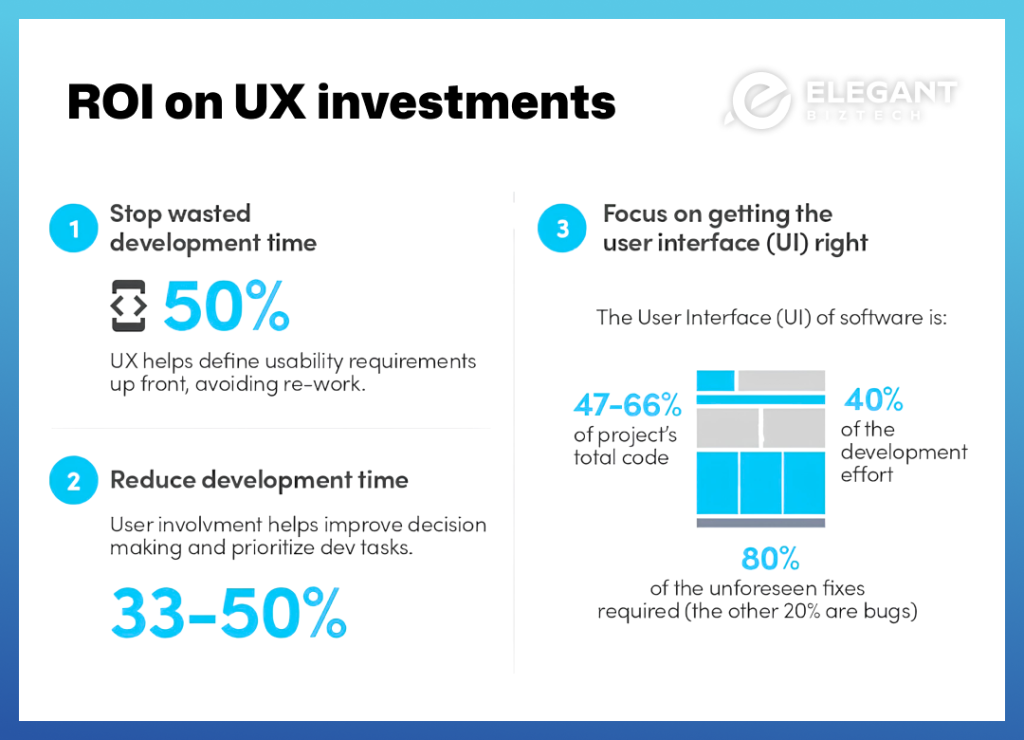
Investing in good UX design isn’t just about creating visually appealing platforms—it’s about delivering tangible business results. Businesses that prioritise UX design experience significant returns on investment (ROI), including higher customer retention, increased conversions, and reduced development costs.
One of the most compelling benefits of good UX design is its impact on customer retention. Engaging and intuitive designs encourage users to spend more time on your platform, explore your offerings, and return for future interactions. For example, e-commerce platforms with well-designed product pages and a streamlined checkout process see higher repeat purchase rates compared to those with confusing layouts.
Good UX design also drives conversions by guiding users through a seamless customer journey. Whether it’s signing up for a service, making a purchase, or filling out a contact form, a well-designed interface minimizes friction and ensures that users can complete their desired actions effortlessly. A report by Forrester revealed that every $1 invested in UX yields a return of up to $100, highlighting the significant financial benefits of prioritising UX design.
Additionally, addressing usability issues during the design phase prevents costly fixes during development. By investing in UX design upfront, businesses can avoid the need for expensive redesigns and bug fixes later in the product lifecycle.
How UX Impacts the Customer Journey
Good UX design plays a crucial role in optimizing every stage of the customer journey, from initial discovery to post-purchase engagement. By creating intuitive and user-friendly experiences, businesses can guide users through a seamless journey that meets their needs and exceeds their expectations.
Simplified navigation is one of the most significant contributions of good UX design. Users should be able to find the information or products they need without unnecessary clicks or confusion. Intuitive menus, clear labels, and logical layouts ensure that users can effortlessly explore your platform. For example, a travel booking website with a straightforward search and filter system can significantly enhance the user experience by making it easy for customers to find flights, hotels, or packages that suit their preferences.
Personalization is another critical aspect of UX design that enhances the customer journey. By leveraging user data and preferences, businesses can deliver tailored experiences that resonate with individual users. For instance, e-commerce platforms that recommend products based on a user’s browsing history or past purchases create a more engaging and satisfying experience.
A well-designed UX also instills trust and credibility in your brand. Polished, professional interfaces signal that your business values quality and attention to detail. This is particularly important for industries like finance, healthcare, and e-commerce, where trust plays a critical role in user decisions.
Table Example :
| UX Feature | Impact on Customer Journey |
| Intuitive navigation | Faster product/service discovery |
| Mobile optimization | Improved accessibility on-the-go |
| Clear call-to-actions | Higher conversion rates |
Emerging UX Trends in 2025
As technology continues to evolve, UX design trends are constantly shifting to meet new user expectations and preferences. Staying ahead of these trends is essential for businesses looking to maintain a competitive edge in 2025.
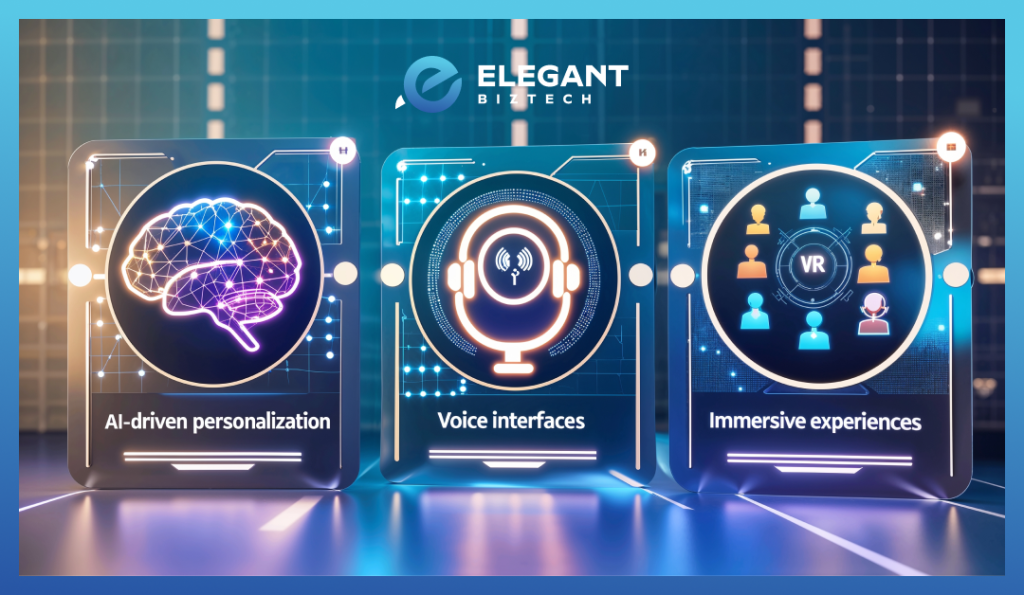
One of the most prominent trends is AI-driven personalization. By leveraging machine learning algorithms, businesses can deliver hyper-personalized experiences that adapt to individual user behaviors and preferences. For example, streaming platforms like Netflix use AI to recommend content based on a user’s viewing history, creating a more engaging experience.
Voice user interfaces are also gaining traction as smart speakers and voice-activated devices become more popular. Designing for voice commands requires a unique approach that prioritizes clarity, simplicity, and context-awareness.
Immersive experiences powered by augmented reality (AR) and virtual reality (VR) are another trend shaping the future of UX design. Industries like retail and real estate are leveraging AR and VR to provide interactive and immersive experiences, such as virtual try-ons or 3D property tours.
Finally, inclusive design is becoming a priority for businesses seeking to create accessible experiences for diverse user groups. By considering factors like color contrast, font size, and screen reader compatibility, UX designers can ensure that their platforms are usable by everyone, including individuals with disabilities.
Why Hiring UI/UX Designers is Essential
Hiring skilled UI/UX designers is a strategic investment that ensures your business delivers exceptional user experiences while achieving its goals. Designers bring expertise in best practices, tools, and methodologies that enable them to create user-centered solutions tailored to your target audience.
UI/UX designers also streamline the design process, saving time and resources. Their ability to conduct user research, create prototypes, and test designs ensures that your final product meets user needs and expectations. This not only reduces the risk of costly revisions but also accelerates the time-to-market for your products.
In addition, UI/UX designers collaborate with other teams, including developers, marketers, and product managers, to create cohesive and effective solutions. Their ability to bridge the gap between technical requirements and user needs ensures that your products are both functional and user-friendly.
Conclusion
In an era where user experience can make or break a business, investing in skilled UI/UX designers is essential for success. From driving customer satisfaction to delivering measurable ROI, good UX design is a powerful tool that helps businesses thrive in competitive markets. By staying ahead of emerging trends and prioritising user needs, businesses can create impactful solutions that leave a lasting impression.
FAQs:
1. What is UX design, and why is it important for businesses?
UX design focuses on creating intuitive and engaging user experiences, ensuring customer satisfaction and loyalty.
2. How does good UX design impact business ROI?
Good UX design boosts conversions, reduces churn, and minimizes development costs, delivering a high return on investment.
3. What are the key UX trends for 2025?
Emerging trends include AI-driven personalization, voice interfaces, immersive experiences, and inclusive design.
4. When should businesses hire a UI/UX designer?
Hiring UI/UX designers during the early stages of product development ensures that your solutions are user-centric and aligned with business goals.