APIs (Application Programming Interfaces) serve as the backbone of modern applications, enabling seamless data exchange between different systems, services, and applications. With the rapid evolution of digital platforms, securing APIs has become a top priority to protect sensitive data and prevent cyber threats. In this blog, we’ll explore why Secure APIs are essential, the best API security practices for 2025, and how hiring backend developers ensures robust API implementation.
What Are APIs and Why Do They Need Security?
APIs act as intermediaries that allow applications to communicate with each other. Whether you’re using a mobile app, a cloud-based service, or an IoT device, APIs enable data sharing across platforms. However, this interconnectivity also introduces security vulnerabilities, making APIs a prime target for hackers.
Common API security threats include:
- Unauthorized Access – Attackers exploit weak authentication mechanisms to gain access.
- Data Breaches – Insecure APIs expose confidential data, leading to major breaches.
- Injection Attacks – Hackers manipulate API inputs to execute malicious code.
- DDoS Attacks – Overloading APIs with excessive requests disrupts service availability.
To mitigate these risks, implementing API security best practices is essential.

Key API Security Best Practices in 2025
To ensure a secure API infrastructure, businesses must follow these security principles:
1. Implement Strong Authentication & Authorization
Using robust authentication mechanisms such as OAuth 2.0, JWT (JSON Web Token), and API Keys ensures that only verified users and applications can access your API.
- OAuth 2.0 enables token-based authentication, reducing credential exposure.
- Role-Based Access Control (RBAC) restricts API access based on user roles.
2. Use HTTPS and TLS Encryption
Encrypting data in transit using TLS (Transport Layer Security) prevents eavesdropping and man-in-the-middle attacks. APIs should never transmit sensitive information over HTTP without encryption.
3. Rate Limiting and Throttling
Rate limiting prevents API abuse by restricting the number of requests a user or IP can make within a specific timeframe. Throttling mechanisms also prevent DDoS attacks by managing traffic loads efficiently.
4. Secure Data Storage and Transmission
- Do not store sensitive data in URLs (e.g., avoid sending API keys in query parameters).
- Encrypt stored API data using AES (Advanced Encryption Standard).
5. Validate Input Data and Sanitize Requests
API endpoints must validate all incoming requests to prevent SQL injections, XSS (Cross-Site Scripting), and CSRF (Cross-Site Request Forgery) attacks. Implement strict schema validation for incoming API calls.

The Role of Backend Developers in API Security
Backend developers play a crucial role in building secure APIs by implementing best practices at every stage of development. Hiring experienced API developers ensures the following:
1. Secure API Architecture
Backend developers design APIs with security-first principles, ensuring that authentication, authorization, and encryption are seamlessly integrated.
2. Threat Detection & Mitigation
Expert developers use API security testing tools such as OWASP ZAP and Postman to detect vulnerabilities before deployment.
3. Ongoing API Maintenance & Security Updates
Regular API updates, security patches, and vulnerability testing help prevent evolving threats. Hiring backend developers ensures that your APIs stay updated with the latest security protocols.
The Business Impact of API Security
API security is not just a technical necessity—it has a direct impact on businesses. A data breach through an insecure API can lead to severe financial losses, reputational damage, and legal consequences. Enterprises investing in secure APIs gain multiple business benefits:
- Customer Trust & Brand Reputation – Businesses with strong security measures ensure user confidence, reducing churn rates.
- Regulatory Compliance – Secure APIs help meet industry regulations like GDPR, HIPAA, and PCI DSS, preventing legal penalties.
- Reduced Downtime & Financial Losses – Preventing API attacks minimizes service disruptions and associated costs.
- Competitive Advantage – Companies with robust API security strategies position themselves as trusted tech providers.
By prioritizing backend system security, businesses not only protect their infrastructure but also enhance operational efficiency and scalability.
API Security and Cloud Computing: What You Need to Know
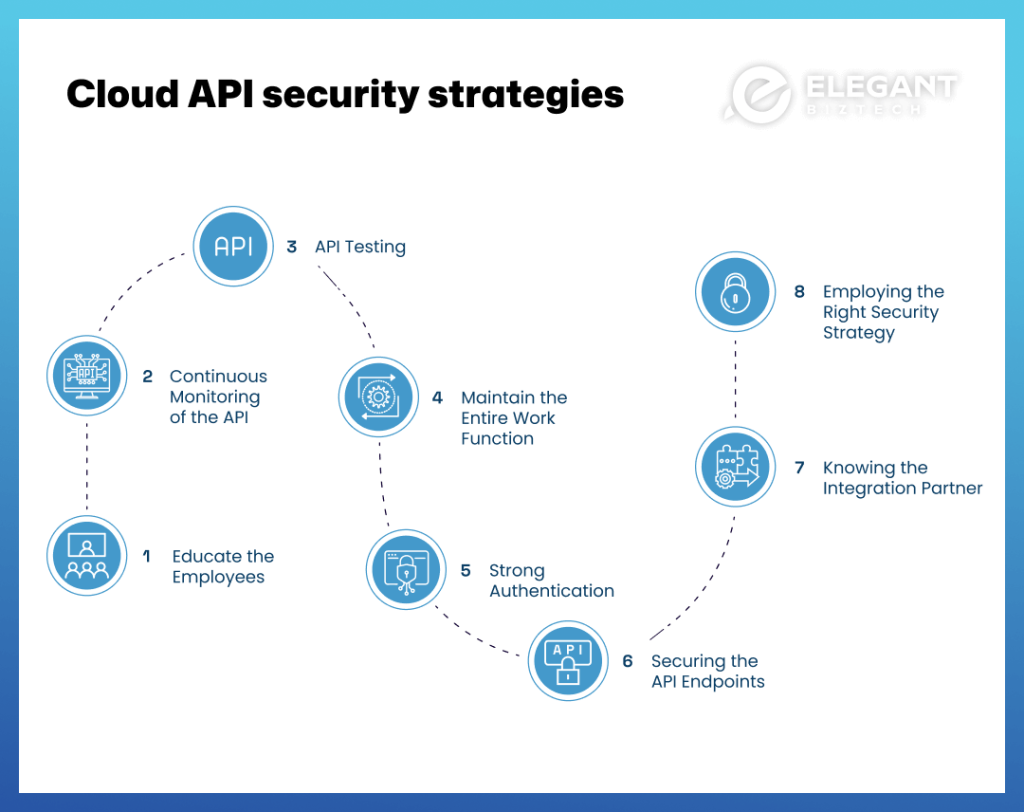
As businesses increasingly migrate to cloud-based architectures, securing APIs in cloud environments has become a critical challenge. Cloud APIs facilitate seamless integration between applications and services, but they also introduce new vulnerabilities.
Key API security considerations for cloud-based applications:
- API Gateway Security – Cloud platforms require API gateways like AWS API Gateway and Azure API Management for secure access control.
- Cloud Data Encryption – Data transmitted between cloud-based APIs should always be encrypted using TLS/SSL.
- Identity & Access Management (IAM) – Implement fine-grained access control to prevent unauthorized API access.
- Multi-Cloud Security Challenges – APIs operating across multiple cloud platforms need consistent security policies to avoid cross-cloud vulnerabilities.
Businesses leveraging cloud computing must adopt a holistic API security approach to protect sensitive data and ensure compliance with cloud security best practices.
Common API Security Challenges and How to Overcome Them
| API Security Challenge | Solution |
| Weak Authentication | Implement OAuth 2.0 and Multi-Factor Authentication (MFA) |
| Data Exposure | Use encryption (TLS, AES) and avoid storing sensitive data in URLs |
| API Abuse (DDoS) | Implement rate limiting and API gateways |
| Injection Attacks | Use input validation and secure API endpoints |
| Security Misconfigurations | Regular API security audits and compliance checks |
Best Tools for API Security in 2025
To enhance API security, businesses rely on advanced tools that automate threat detection and compliance. Here are the best tools for securing APIs:
- OWASP ZAP – An open-source security scanner for identifying vulnerabilities.
- Postman – Used for API testing and security validation.
- Cloudflare API Shield – Protects APIs from bot attacks and abuse.
- JWT.io – Helps manage JWT authentication securely.
Future of API Security: Trends to Watch
With increasing cyber threats, API security is evolving with innovative solutions:
- Zero Trust Security Model – APIs adopt a “never trust, always verify” approach.
- AI-Based Security Solutions – AI enhances real-time API threat detection.
- Automated API Security Audits – Continuous monitoring prevents breaches.
- Blockchain for Secure Transactions – Blockchain technology improves API security for financial applications.
The Future of API-First Development and Security
With digital transformation accelerating, businesses are shifting to API-first development, where APIs are built as the foundation of applications rather than as afterthoughts. This shift enhances scalability, flexibility, and security—but also necessitates better API security measures.
Key trends shaping API security in API-first development:
- Automated API Security Testing – Security testing tools integrated into DevOps pipelines ensure API security from development to deployment.
- AI-Driven Threat Detection – Machine learning algorithms analyze API traffic for real-time threat detection.
- Decentralized Identity Management – Blockchain-based identity management ensures secure API authentication without centralized credentials.
- API Observability & Monitoring – Real-time API analytics detect anomalies, unauthorized access attempts, and suspicious API behaviors.
As businesses adopt an API-first approach, ensuring security remains at the core of API development is critical for future-proofing applications.
Conclusion
As businesses rely more on digital applications, securing APIs has become non-negotiable. Whether you’re an enterprise, startup, or software company, ensuring robust API security practices is critical for protecting sensitive data. Hiring experienced backend developers allows businesses to build and maintain secure, scalable, and resilient API infrastructures.

FAQs
1. Why is API security important for modern applications?
API security protects sensitive data, prevents unauthorized access, and ensures application reliability against cyber threats.
2. What are the best authentication methods for APIs?
OAuth 2.0, JWT, and API keys are commonly used for secure authentication.
3. How can rate limiting enhance API security?
Rate limiting prevents API abuse by restricting the number of requests per user, reducing the risk of DDoS attacks.
4. What are the most common API vulnerabilities?
Weak authentication, data exposure, injection attacks, and security misconfigurations are major API threats.
5. How do backend developers ensure API security?
Backend developers implement encryption, authentication mechanisms, input validation, and continuous monitoring to enhance API security.